
Coconut Oil in Personal Care: Benefits for Soap, Shampoo, and Healthy Hair and Skin
Coconut oil has earned its place in bathrooms for a simple reason: it does more than smell good. In the right formula, it can help skin feel softer, support a rich soap lather, smooth dry-looking hair, and add a naturally derived ingredient to everyday routines.
It is not magic, and it is not right for every skin or hair type. But when used well, coconut oil can be a practical, affordable, and effective ingredient in soap, shampoo, conditioner, and homemade treatments.
This guide breaks down what coconut oil actually does in personal care products, how to choose better formulas, and a few simple DIY recipes to try at home.

Why coconut oil works so well in personal care
Coconut oil is pressed from the meat of mature coconuts. It is rich in fatty acids, especially lauric acid, which gives it a smooth texture and helps explain why it shows up in so many skin and hair products.
In personal care, coconut oil is used for three main reasons.
It helps reduce moisture loss.
Coconut oil forms a light, oil-based layer on the skin or hair. That layer can help slow water loss and make dry areas feel more comfortable. This is why it often appears in body bars, lotions, balms, and conditioners.
It supports cleansing formulas.
When coconut oil is turned into soap through saponification, it helps create firm bars with bubbly lather. It is one of the classic oils used by soap makers because it cleans well and helps a bar last longer.
It has natural antibacterial properties.
Lauric acid and its related compounds have been studied for their ability to work against certain microbes. In personal care, this does not mean coconut oil replaces handwashing, preservatives, or medical care. It does mean coconut oil can be a useful ingredient in cleansing and care formulas, especially when balanced with other oils and safe product design.
Coconut oil also has a pleasant feel. It melts easily with body warmth, spreads well, and blends with ingredients like shea butter, aloe, honey, oats, and essential oils.
A quick note before using it everywhere: coconut oil can feel heavy on some skin types and may clog pores for people who are acne-prone. It can also build up on fine, low-porosity, or easily weighed-down hair. A patch test is a smart first step.
Coconut oil in soap helps create cleansing, creamy bars
Coconut oil is a favorite in handmade and commercial soap because it produces a hard bar with a generous lather. Unlike applying plain coconut oil to the skin, coconut oil in true soap has gone through a chemical reaction with lye. This turns the oils into soap and glycerin.
That matters because a coconut oil soap bar does not behave the same way as straight oil. It cleanses, rinses, and foams.
What coconut oil adds to soap
Coconut oil brings several useful qualities to soap:
A firmer bar that lasts longer in the shower
Big, bubbly lather
Strong cleansing power
A smooth, creamy feel when balanced with gentler oils
A naturally derived base for simple body and hand soaps
The key word is balanced. A soap made with too much coconut oil can feel drying because it cleans so well. Many soap makers pair it with olive oil, avocado oil, cocoa butter, shea butter, or castor oil to soften the feel.
For daily use, look for soaps that list coconut oil along with moisturizing ingredients. If a bar leaves skin tight or squeaky, it may be too cleansing for your skin, especially in colder months.
DIY coconut oil melt-and-pour soap
Cold-process soap making requires lye, careful measuring, protective gear, and curing time. For a beginner-friendly project, melt-and-pour soap is easier and safer because the soap base has already been made.
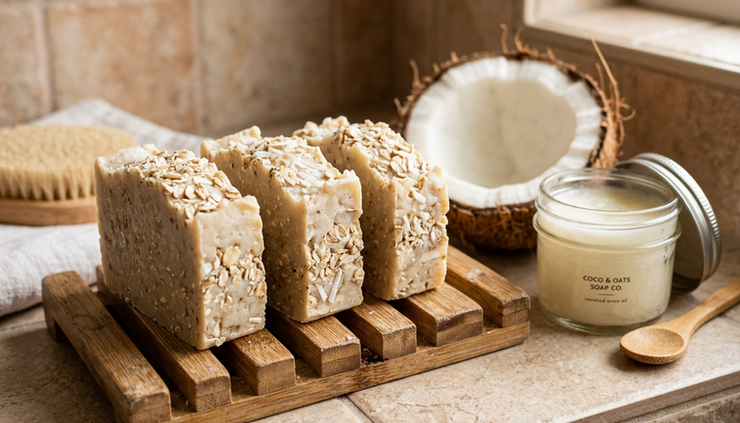
Simple coconut oat soap bars
Ingredients:
1 pound shea butter or glycerin melt-and-pour soap base
1 tablespoon coconut oil
2 tablespoons finely ground oats
1 teaspoon honey, optional
10 to 15 drops lavender or sweet orange essential oil, optional
Steps:
Cut the soap base into cubes.
Melt it in a microwave-safe bowl in short bursts, stirring often.
Stir in the coconut oil until fully melted.
Add the ground oats and honey.
Add essential oil if using.
Pour into silicone molds.
Let the bars cool until firm, then remove from the molds.
Use these bars within a few months and keep them dry between uses. A draining soap dish helps prevent soft, mushy bars.
Coconut oil in shampoo can cleanse while supporting the scalp and strands
Shampoo has a tough job. It needs to remove oil, sweat, styling products, and daily buildup without leaving hair rough. Coconut oil can help when used in the right kind of formula.
In shampoo, coconut-derived ingredients may appear in a few forms. Some products contain coconut oil itself. Others use cleansing agents or conditioners derived from coconut fatty acids. These ingredients are not all the same, but they share a coconut origin.
How coconut oil supports hair in shampoo
Coconut oil is known for its ability to help reduce protein loss from hair when used before or during washing. Hair is made largely of keratin, a protein. Washing, brushing, heat styling, and chemical services can all make hair feel weaker or drier over time.
Coconut oil has a small molecular structure compared with many oils, which helps it interact well with the hair shaft. When used before shampooing, it can reduce the swollen, rough feeling that some hair gets after washing.
In shampoo formulas, coconut oil may help:
Leave hair feeling softer after cleansing
Reduce the dry feel that can come from frequent washing
Support a healthy-looking scalp by helping prevent excess dryness
Add slip so hair tangles less during washing
That said, shampoo still needs a good cleansing system. A product that simply adds coconut oil without a thoughtful formula may leave hair greasy or flat.
Who may like coconut oil shampoo
Coconut oil shampoo often works well for:
Dry, coarse, curly, or textured hair
Hair that looks dull or frizzy after washing
Scalp that feels dry but not medically irritated
Hair exposed to sun, salt water, or frequent heat styling
People with very fine hair may prefer lighter formulas, or they may use coconut oil as an occasional pre-shampoo treatment instead of a daily shampoo ingredient.
DIY pre-shampoo coconut oil treatment
This is one of the easiest ways to use coconut oil for hair without making the shower floor slippery or ending up with oily roots.
Softening pre-shampoo treatment
Ingredients:
1 to 2 teaspoons coconut oil for short or fine hair
1 tablespoon coconut oil for thick or long hair
1 teaspoon aloe vera gel, optional
Steps:
Warm the coconut oil between your palms until it melts.
Apply it from mid-length to ends.
Use only a tiny amount near the scalp, or skip the scalp if it gets oily.
Leave it on for 15 to 30 minutes.
Shampoo well, adding a second wash if needed.
Follow with conditioner.
Start with less than you think you need. Coconut oil spreads easily, and too much can take extra shampoo to remove.

Coconut oil in conditioner helps smooth, soften, and protect hair
Conditioner is where coconut oil often shines. While shampoo focuses on cleansing, conditioner focuses on making hair feel manageable. Coconut oil can add softness, reduce roughness, and help hair look smoother.
The best coconut oil conditioners do not rely on oil alone. They combine oils with conditioning agents, humectants, and sometimes proteins or plant extracts. This makes the product easier to rinse and less likely to leave a heavy film.
What coconut oil does in conditioner
Coconut oil can improve the feel of hair in several ways.
It helps smooth the cuticle, which is the outer layer of the hair. When the cuticle lies flatter, hair reflects light better and looks shinier.
It adds slip, which makes detangling easier. This can reduce breakage from tugging with a brush or comb.
It helps dry ends feel more flexible. This does not repair split ends permanently, but it can improve how hair looks and feels between trims.
It can support curl definition when used in moderation. For curly or coily hair, coconut oil may help seal moisture into the strand after water-based products.
When to use less coconut oil
Coconut oil is rich. More is not always better.
Use a lighter hand if hair is:
Fine or thin
Naturally oily at the roots
Low porosity and prone to product buildup
Limp after using heavy masks
Sensitive to rich oils or butters
If hair feels stiff, coated, or dull after coconut oil, clarify with a gentle clarifying shampoo and use less next time. Some hair simply prefers lighter oils, such as argan, grapeseed, jojoba, or meadowfoam.
DIY coconut oil conditioner mask
This mask is best for dry ends, thick hair, curls, coils, or hair that feels rough after heat styling.
Coconut honey hair mask
Ingredients:
1 tablespoon coconut oil
1 tablespoon aloe vera gel
1 teaspoon honey
1 tablespoon plain conditioner
Steps:
Melt the coconut oil until soft but not hot.
Stir in aloe vera gel, honey, and conditioner.
Apply from mid-length to ends.
Cover hair with a shower cap or towel.
Leave on for 15 to 20 minutes.
Rinse very well, then shampoo lightly if hair feels oily.
Avoid applying honey-heavy mixtures directly to the scalp if it is easily irritated. Always rinse thoroughly.
How coconut oil supports healthy-looking skin
Coconut oil can also play a useful role in skin care, especially for dry or rough areas. It is often found in body butters, cleansing balms, lip products, cuticle creams, and body scrubs.
Its main skin benefit is moisture support. Coconut oil helps soften the skin surface and reduce the dry, tight feeling that can happen after washing. It works especially well on elbows, knees, heels, hands, and other areas that need extra care.
The natural antibacterial properties of coconut oil also make it appealing in cleansing products. Still, it should be viewed as a supportive ingredient, not a treatment for infections, acne, eczema, or other skin conditions. For ongoing irritation, pain, cracking, or rash, it is best to ask a licensed health professional.
Best ways to use coconut oil on skin
Try coconut oil where richer moisture makes sense:
As a body oil after showering, applied to damp skin
On dry elbows, knees, and heels
As a cuticle softener
As part of a sugar scrub for rough body skin
In a cleansing balm that gets washed away
Be careful with coconut oil on the face. Some people tolerate it well, while others break out. If skin is acne-prone, use coconut oil in rinse-off products first, such as soap or cleanser, rather than leaving it on overnight.
DIY coconut sugar body scrub
This simple scrub is for the body, not the face. Facial skin is more delicate and can be irritated by rough sugar granules.
Coconut sugar body polish
Ingredients:
1/2 cup granulated sugar
2 tablespoons coconut oil
1 teaspoon jojoba oil or olive oil
3 to 5 drops vanilla or lavender essential oil, optional
Steps:
Stir the sugar and oils together in a clean bowl.
Scoop into a clean jar with a lid.
Massage gently onto damp skin.
Rinse well.
Pat dry and follow with lotion if needed.
Use caution in the shower because oils can make surfaces slippery. Do not use the scrub on broken, sunburned, or freshly shaved skin.

Tips for choosing better coconut oil personal care products
A good coconut oil product should feel effective, pleasant, and appropriate for the way it is used. The front label may say “with coconut oil,” but the ingredient list tells the fuller story.
Read the ingredient list
Ingredients appear in order from highest to lowest amount. If coconut oil appears near the end, the product may contain only a small amount. That is not always bad, especially in shampoo, where too much oil can weigh hair down. But for a body butter or balm, a higher placement may matter more.
Look for names such as:
Cocos nucifera oil
Coconut oil
Hydrogenated coconut oil
Coconut acid
Sodium cocoate in true soap
Coconut-derived cleansers in shampoos
In soap, sodium cocoate means coconut oil has reacted with lye to form soap. In shampoo, coconut-derived cleansing ingredients may offer foam and cleansing, but they are not the same as pure coconut oil.
Match the product to the goal
For dry hands or body skin, choose creams, balms, or soaps with coconut oil plus gentle moisturizers.
For dry hair, choose conditioners or masks that combine coconut oil with aloe, glycerin, fatty alcohols, or plant butters.
For oily hair, choose coconut-derived shampoos that rinse clean rather than oil-heavy formulas.
For sensitive skin, choose fragrance-free or low-fragrance products. Essential oils can smell lovely, but they can irritate some skin.
Avoid products that rely only on hype
Coconut oil is useful, but it should not be the only reason to buy a product. A good formula should also have the right texture, safe preservation when water is present, and clear directions.
Be cautious with claims that sound too big. Coconut oil can support soft skin and healthy-looking hair, but it does not cure scalp conditions, erase wrinkles, or repair split ends permanently.
Choose packaging that fits how you use it
Jars work well for thick balms and scrubs, but tubes and pumps are often cleaner for daily lotions and conditioners. Any product that contains water needs proper preservatives, even if it is marketed as natural.
For DIY recipes that include water, aloe, tea, or fresh ingredients, make small batches and use them quickly. Store them in the refrigerator when appropriate, and discard anything that changes smell, color, or texture.
A simple way to add coconut oil to a beauty routine
The easiest way to start is to pick one use, not five. Swap in a coconut oil soap for handwashing, try a pre-shampoo treatment once a week, or use a coconut conditioner on dry ends. Notice how skin and hair respond over two or three uses.
Coconut oil in personal care works best when it is treated as a helpful ingredient, not a cure-all. It can moisturize, support rich lather, add softness, and bring plant-based care into everyday routines. With the right products and simple homemade recipes, it can become a reliable part of caring for healthy-looking hair and skin.


Comments